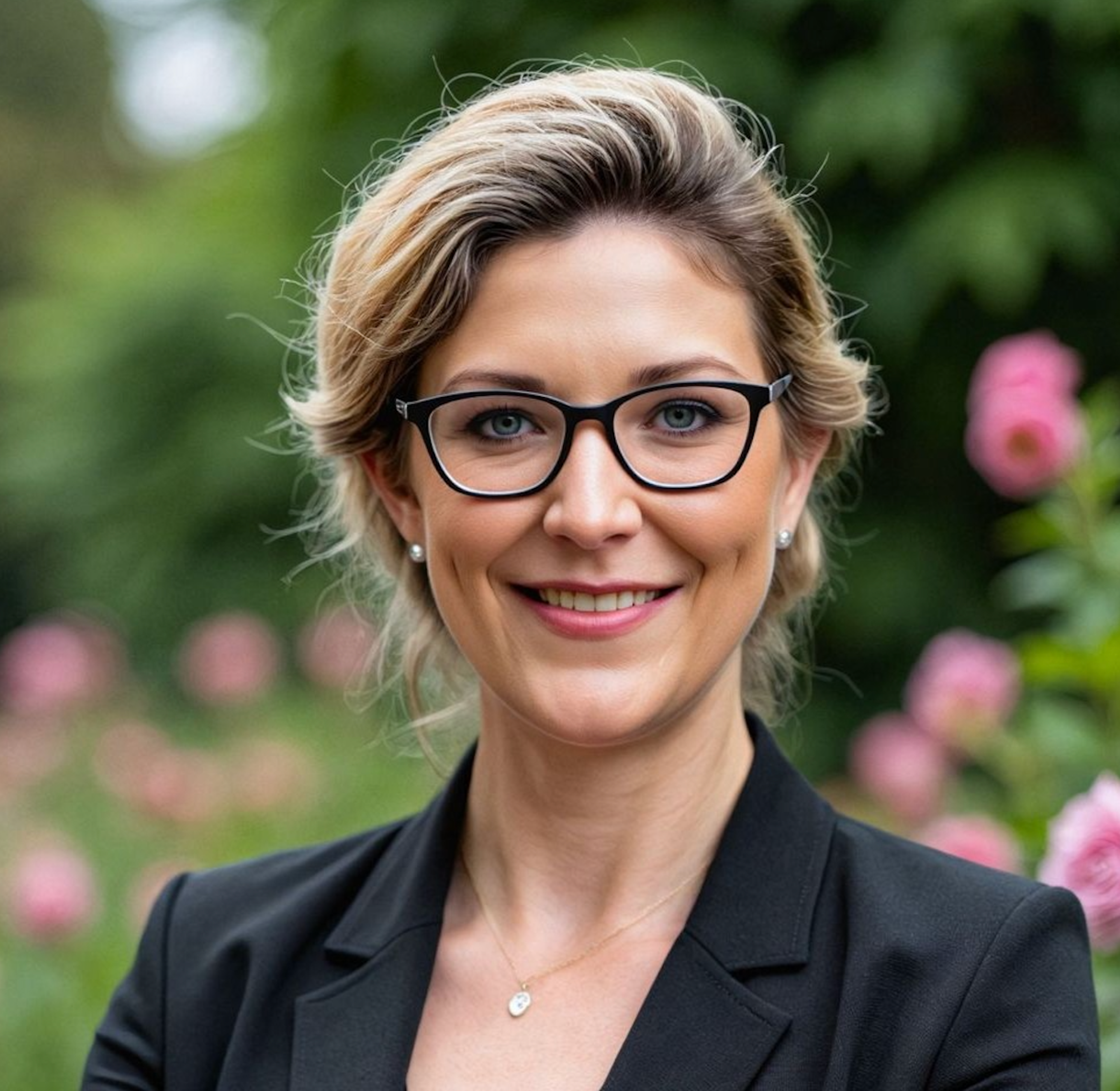
TES Tale: Vanessa Tietze, TES’ Market Development Manager
January 16, 2026
Reading time: 4 min
1. How did you get into the renewable energy sector?
Even at school, I knew that I wanted to work in the renewable energy sector, so I deliberately looked for degree programmes that would prepare me for that path. A strong scientific foundation was particularly important to me, which is why I chose to study engineering. At the same time, I quickly realised that I did not see myself in a purely technical role. To broaden my perspective, I integrated elements from other disciplines, such as organisation, economics and law, into my studies. I later deepened this interdisciplinary approach through part-time training and additional qualifications in business administration and conflict resolution. This combination has proven extremely valuable, as the energy transition is not only a technological challenge, but also a societal transformation. After completing my studies, I began my career as a research assistant in renewable hydrogen, and hydrogen and its derivatives have remained a central theme throughout my professional journey.
2. Why did you make the decision to join TES? How does TES do things differently in the energy industry?
The role of Market Development Manager at TES immediately appealed to me because of its strategic breadth. I enjoy working on complex questions where technical, economic and political dimensions must be considered together to arrive at viable solutions. TES’s international orientation and its strong emphasis on building resilient, ecosystem-based partnerships were also decisive factors for me.
What truly sets TES apart, in my view, is its pragmatic approach to accelerating the energy transition through e-NG as a drop-in solution. While many discussions, particularly in Germany, focus on derivatives such as ammonia or methanol, TES has chosen a pathway that adapts the molecule to existing transport, storage and utilisation infrastructure. Other molecules often require significant restructuring of entire value chains. In the long term, we will need a portfolio of renewable molecules to meet our climate goals, but e-NG offers clear strategic advantages, especially in the early phase of establishing international supply chains.
3. Describe your day-to-day role at TES and what skills do you find most important in your job? What’s the most exciting part of your role at TES?
My day-to-day work at TES is highly diverse. It ranges from monitoring energy policy developments and broader market trends, to analysing potential customer segments, participating in stakeholder processes, and engaging in relevant networks and associations. I also contribute to drafting company statements, position papers and press releases together with colleagues, and I lead or support strategically important internal projects.
It is difficult to single out one most important skill. For me, the role requires a combination of analytical thinking, strong communication skills and a high degree of adaptability. What I find most exciting is being close to political and economic decision-making and exchanging perspectives with a wide range of stakeholders, which is also why Berlin is an ideal location for me.
4. What are some of the biggest risks or roadblocks in this process, and how do you overcome them?
The transition to climate-friendly energy systems is a complex societal endeavour that requires broad stakeholder involvement and long-term commitment. It is therefore unsurprising that this process is accompanied by intense debate. In Germany, however, there is sometimes a tendency to focus too strongly on potential obstacles and to strive for perfection from the outset. This can delay necessary decisions and foster a culture of waiting rather than acting.
To counteract this, I believe it is essential to maintain a pragmatic mindset, to continuously question our own assumptions, and to communicate in a solution-oriented and transparent way. A more objective and goal-driven public discourse, particularly in media coverage, would also help create momentum and trust in the transition process.
5. What’s a current project you are working on that you feel will be a game changer?
To achieve our energy and climate targets, we must now consistently transition molecule-based energy and feedstock supplies to green alternatives. This requires reliable and long-term framework conditions that enable investment certainty, while keeping costs for consumers manageable. After analysing different policy instruments, TES sees a green gas quota as the most promising approach.
Together with a group of senior experts in energy markets and energy law, TES has developed a green gas quota model designed to balance multiple, sometimes competing, objectives while ensuring measurable impact. The model prioritises economic efficiency while stimulating technological and commercial innovation, thereby creating a sustainable role for renewable molecules. International experience, for example in Canada and Japan, shows that clear political commitments can unlock concrete project development and significantly accelerate the global green gas economy.
6. What is the one thing you want everyone to know about electric natural gas?
An aspect that has so far received little attention in the public debate is that we live in a fundamentally carbon-based world. As decarbonisation progresses, the demand for green carbon carriers as sustainable raw material sources will increase. Beyond its initial role as a hydrogen carrier, I see significant potential for e-NG to become increasingly relevant as a renewable carbon carrier in the future.
7. What part of TES’s values - We are PURPOSEFUL in winning the climate race. We are BOLD and CONFIDENT in our trajectory. We are ENTREPRENEURIAL with a heart and take ownership for doing the right things. We SUCCEED IN PARTNERSHIPS, along the whole value chain, with transparency and respect. - most resonates with you and why?
For me, TES’s values form a coherent whole. If I had to highlight one in particular, it would be: We are PURPOSEFUL in winning the climate race. I have been personally committed to advancing renewable energy for many years, and this sense of purpose gives real meaning to my work. Climate change is a tangible and urgent threat, and both scientific evidence and observable developments underline the need for decisive action. Contributing to solutions that address this challenge is a strong personal motivator for me.
8. For newcomers in the renewable energy sector, what skill sets or experiences would you recommend they pursue?
The renewable energy sector is both highly dynamic and demanding. Technologies, markets and regulatory frameworks can evolve rapidly, and companies must be able to adapt continuously. My advice to newcomers is to remain open to a broad range of topics within the sector, while choosing a career path that aligns with their own strengths and interests. From there, it is essential to keep learning and to continuously expand one’s skills, both technically and beyond, to remain effective in this fast-changing environment.